
再见阿郎
US transshipment claims attempt to build ‘higher fence,’ disrupt global supply chains: experts_我的网站

一 |
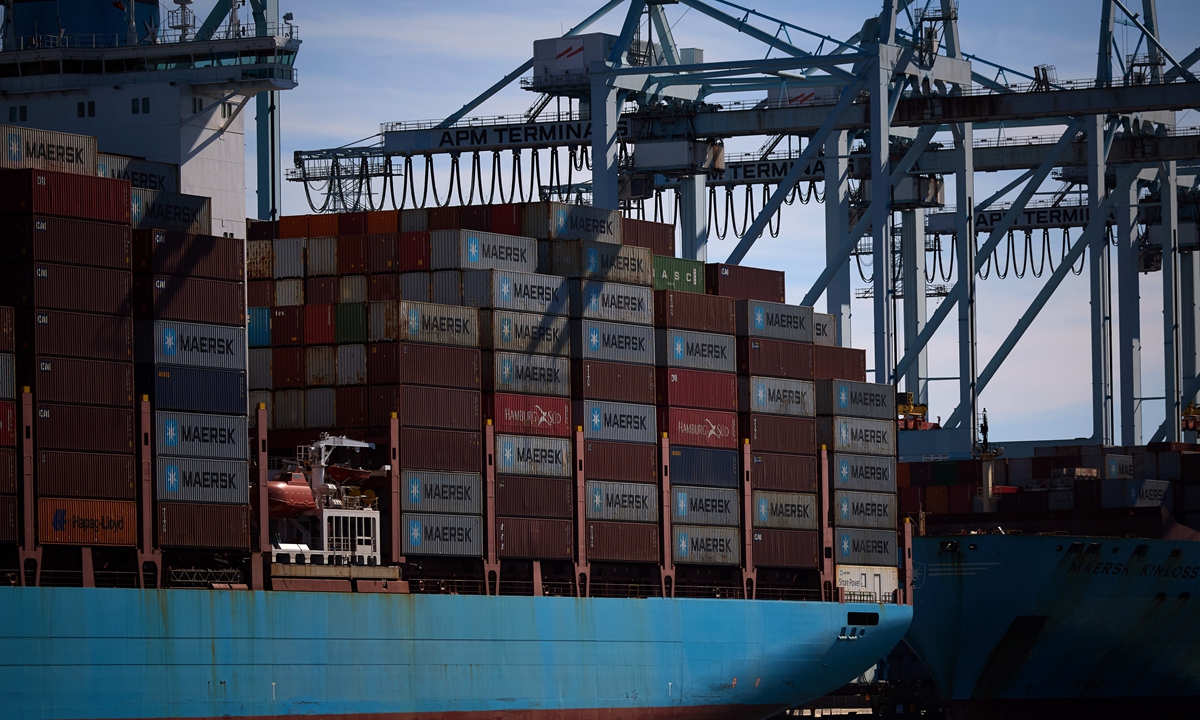
When even major US allies and trading partners are swept into Washington's alleged China-linked transshipment network, is the US still cracking down on its so-called illegal tariff evasion, or is it raising its "small yard, high fence" higher and tighten it further by wielding its tariff stick and extending tariff controls across normal global supply chains?
The White House on Thursday released a report identifying roughly 40 economies as participants in what it calls a "Shadow Transshipment Network", alleging that Chinese goods are being routed through third countries to evade higher US tariffs. The list stretches across Asia, Europe and the Americas and includes some of Washington's closest allies and largest trading partners.
Chinese experts said the report is partly aimed at defending Washington's tariff policy by shifting responsibility for its weakened impact onto other economies, while also pressuring them to follow US trade and origin rules. In effect, the US is trying to extend its unilateral trade restrictions beyond its own borders and deeper into global supply chains, they said.
Build 'higher fence'
The 25-page report claims that US import sourcing saw a "substantial reallocation" after the 2018 tariffs, as China's direct share declined and imports from identified transshipment economies rose. It alleges that some goods were routed through lower-tariff jurisdictions, where minor processing, relabeling, repackaging, re-invoicing or paperwork changes were used to create the appearance of a new national origin.
However, the report itself acknowledges that alleged transshipment risks in several major economies are "embedded within broad legitimate trade flows." It also admitted that the post-2018 shift in US imports "does not establish" that all displaced Chinese trade was illegally transshipped and partly reflected "legitimate changes in production, investment, and sourcing."
False declarations of origin or simple repackaging can amount to tariff circumvention, but investing overseas, building factories abroad or sourcing components across borders are legitimate forms of supply-chain adjustment, experts said.
One purpose of the report is to portray Washington's tariff policy as effective while attributing its diminished impact to the responses of other economies, Zhou Mi, a researcher at the Chinese Academy of International Trade and Economic Cooperation, told the Global Times.
This allows Washington to shift responsibility onto other economies and put itself in a more favorable position in shaping the narrative around its tariff policy, Zhou said.
Cui Fan, a professor at the University of International Business and Economics, told the Global Times that US rules for determining country of origin are not fully aligned with those used by other economies. The latest move could pressure other countries to adopt US standards, but Cui said such an approach is unlikely to work.
"Countries formulate their rules of origin based on a range of factors, including the scale and technological conditions of their own industries," Cui said. "Industrial structures and the global division of labor cannot be reshaped simply through pressure from one country."
Harmonization of rules of origin - applying the same rules across countries regardless of purpose - "would facilitate the flow of international trade," according to WTO on its website.
It has also warned that misuse of such rules may turn them into "a trade policy instrument" rather than merely a device supporting other trade policy measures, according to WTO.
Washington was pursuing hegemonic politics and unilateral bullying in the economic and trade sphere under the guise of "reciprocity", a spokesperson for China's Ministry of Commerce said when commenting on the US use of tariffs to pressure other countries into restricting economic and trade cooperation with China.
Disrupting global supply chains
Cui said production and trade networks linking China with South Korea, Europe and other economies have taken shape over years of market-driven specialization. By lowering production and logistics costs and improving efficiency, these networks have benefited businesses and consumers across participating economies.
"The real challenge facing global trade today is not so-called illegal transshipment, but the continued damage that unilateralism and trade protectionism are inflicting on the multilateral trading system," Cui added.
Since returning to office, the Trump administration has made tariffs a centerpiece of its trade policy, rolling out sweeping "reciprocal tariffs" and other broad duties that have drawn widespread criticism at home and abroad. On Thursday, Washington announced new Section 232 tariffs on drones and their parts and components, further expanding the range of products subject to US tariffs.
US tariffs have themselves pushed companies to reconfigure supply chains. Washington is now citing those very adjustments as evidence of circumvention, effectively using the market fallout from its own tariff policy to justify further trade restrictions, Chinese experts noted.
International trade is based on mutual benefit, and sovereign countries have the legitimate right to conduct economic and trade cooperation independently, Cui said. "No country should interfere with normal global trade simply to advance its own unilateral interests."
The report broadens its scrutiny beyond routing and documentation to include China-origin inputs or components, Chinese ownership or financing, relationships with Chinese suppliers or manufacturers, China-based production steps and China-origin routing histories.
Analysts believed the latest move is more than simply making the existing "high fence" higher. By trying to bring more economies and a larger portion of global supply chains within the reach of US tariff enforcement, Washington attempted to make the "yard" itself much bigger.
Cui warned that sustained US pressure to reshape normal trade and supply-chain links could fragment mature regional production networks, and reduce the efficiency of global resource allocation, with the impact extending far beyond China-US trade given the wide range of economies named in the report.
Zhou noted that companies would be forced to redesign supply chains to manage rising policy risks, adding costs that could feed back into the US through higher inflation while creating broader frictions and instability for global trade.
。

二 | 这是两对选手首次交锋,王曼昱/蒯曼首局以4比11失利,次局又在领先情况下以9比11遭对手逆转。

三 | 尽管两人随后以11比4、12比10扳平局分,但在决胜局中,国乒组合开场便以0比5落后,最终以5比11落败。赛后杜凯琹直言自己和队友本场均有“超水平发挥”,还透露吴咏琳打出了一些训练中没打出过的球。此外她也坦承,比分胶着时两人的幸运球比较多。谈及决胜局,杜凯琹表示两人拼得很凶,“毕竟和她们打到这种局面很不容易。”年轻队员吴咏琳则认为,获胜关键是心态放得开,“我完全不紧张,就是抱着学习的姿态,拼着对手打,也没有心理包袱,觉得能把训练中的技术打出来就很开心,很高兴发挥了水平。”在其他场次女双角逐中,持外卡参赛的王艺迪/陈熠也遭遇失利,以1比3不敌头号种子张本美和/早田希娜。

四 | 本站比赛,国乒在三个双打项目中仅女双派出两对组合,但双双止步8强。

五 | 而在此前的男双1/4决赛中,国乒“独苗”林诗栋/温瑞博不敌主要对手勒布伦兄弟,同样无缘4强。中国队在双打项目中,仅林诗栋/蒯曼晋级混双半决赛,后者在1/4决赛中“零封”淘汰了大勒布伦/大藤沙月。单打比赛中,国乒男单仅林诗栋、周启豪两人晋级第三轮,向鹏和温瑞博止步次轮。

六 | 其中,11号种子温瑞博以2比3惜败于世界排名仅第64位的东道主外卡选手兰弗利。女单4号种子陈幸同也于本轮不敌外卡选手,以2比3负于日本年轻球员木原美悠,其余6名参赛的国乒女将则悉数晋级。
Current article:http://8a35h.guaxiazaopinduan.cfd/list_hm6k41r/1edi2.html
Published on:15:31:45
下一篇:“反噬”这个词真的听烦了 上一篇:内塔尼亚胡宣称美伊“不可能”达成外交协议


1
宜家和Kodiak合作在美国德州展开自动驾驶送货试点服务2
新时代好少年 热心公益奉献爱心 宣讲传承红色基因3
上海冀“十五五”期间新增认定跨国公司地区总部数量逾300家,上海冀“十五五”期间新增认定跨国公司地区总部数量逾300家4
开电车还能“卖电”赚钱?山东在东营率先开展车网互动价格机制试点5
老人在成都居家4个月燃气费1.5万 官方解释后,“不服”6
整整18天折磨!被电击暴打!英国海归被高薪骗至缅甸:很多人有去无回7
Lok Sabha Speaker condoles Mulayam Singh's death, to attend last rites8
股票开户选择哪个证券公司比较好?2026普通人精准选券攻略9
洛阳:“汉服+”打造文旅沉浸式“穿越”体验10
长安汽车:公司目前生产已全面恢复并积极优化9月排产方案_相关_互动11
减少铝材依赖 保时捷柏林之声400W低音炮将用上氮化镓12
中航西飞:上半年净利润4.9亿元 同比下降28.91%13
《神鬼寓言4》惊现新美妞!玩家兴奋 垃圾审美要改?14
Dark Money Group Backed by DiCaprio's Foundation Funded Law Firm Suing Oil Companies, Media Says15
荣耀林林官宣 WIN 小平板将至,爆料为 8 英寸超高刷窄边框 OLED + 骁龙 8 Elite 系旗舰处理器
- 随机推荐
1
一年最高省5000元!信用卡分期贴息提额扩围 六大行集体落地2
欧菲光:上半年亏损4.44亿元3
串珠成链 一键解锁田园风光4
如何应对低温、雨雪、冰冻天气?5
Waymo将在德国慕尼黑启动自动驾驶测试,计划明年底前正式上线出行服务6
北京自19-20赛季后首次晋级四强,与山西时隔13年再约半决赛7
下届世界杯国足有希望吗?8
中金财富期货:近月合约进一步上行后,焦煤期现价差已逐步收敛9
SL among safest countries to travel10
France is deploying 7,000 troops after a deadly school stabbing by a suspected Islamic radical11
Ranbir Kapoor to Make a Power-Packed Cameo in Prabhas’ Spirit ?12
浦发银行被罚近千万元,涉违规办理期权交易等13
国会议员薪酬普涨 反对党呼吁优先给工人加薪14
超100款新车砸向市场!现代汽车公布史上最大产品投放计划15
东方财富财经早餐 8月26日周三