
电影天堂
干货满满!冬日车入区游览贴士_我的网站

一 | 冬日车入区游览贴士 游园必打卡 满满都是干货 随着冬季到来 车入区的动物们也散发出新的活力 作为园区必打卡的特色区域 这些冬日游览小tips请查收 可以提升你的游览体验哦 #part.01 Tip1·车型选择 免费大巴车 包含在门票内,免费乘坐 宽阔的观赏视角 普通投喂车 特色“铁笼子”车,工作人员喂食 动物们会凑到车旁,可以近距离观察 VIP投喂车 特色老虎头造型 可亲自体验喂食 时间上,推荐大家在 冬季阳光最好的午间时分参观 毛孩子们会更加活跃哦 (行为展示也大多在这个时间段) #part.02 Tip2·车入区特色 大种群散放养 无边界展示形式,扩大生活空间 还原自然生境,拉近观赏距离 动物大迁徙 成群的斑马、角马、羚羊等自由漫步 仿佛动物世界里大迁徙的场景 活跃的猛兽们 猎豹、非洲狮、东北虎、棕熊等猛兽有时在路边巡视领地,有时在林间穿梭,有时在池中戏水。我们为怕冷的猎豹、马来熊等动物都用稻草、暖灯布置了温暖的“避风港”。
Ecological restoration
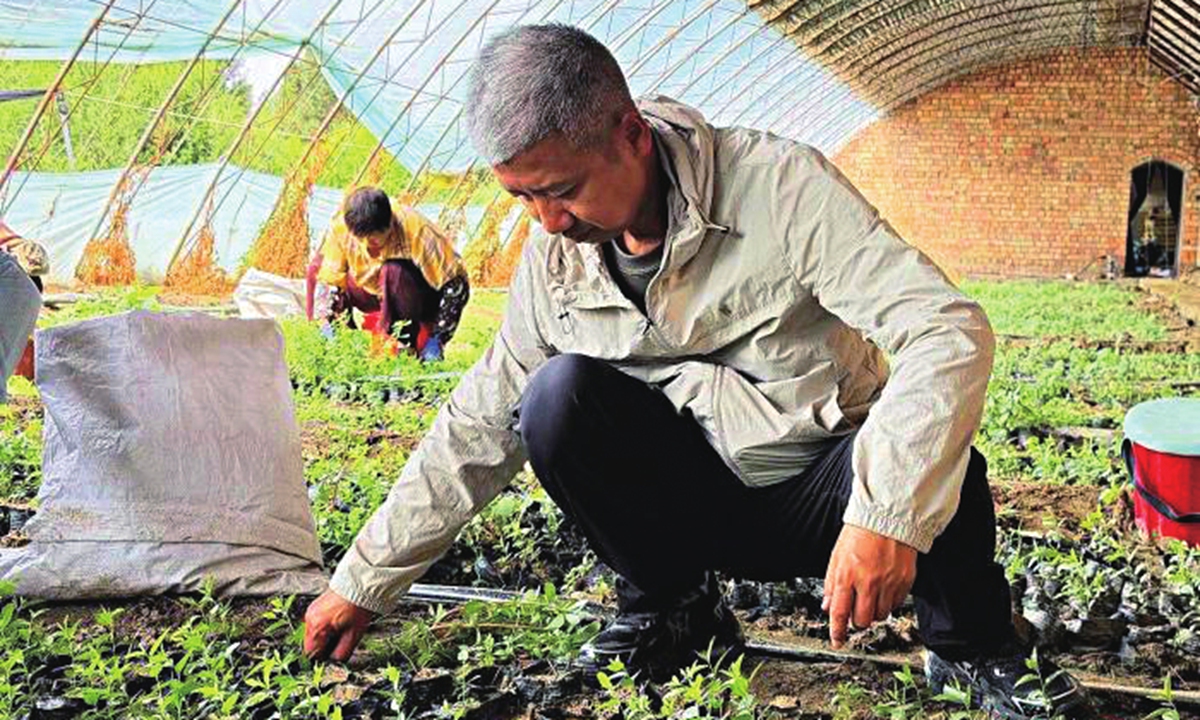
For over 30 years, Wensuyalatu, a member of the leadership group of the Urad Rear Banner forestry and grassland bureau, has made the Gobi Desert his workplace, dedicating his life to combating desertification, advancing ecological restoration through technological innovation, and helping local herders increase their incomes, according to the local bureau's official WeChat account.
Located on the edge of the desert in Bayannur's Urad Rear Banner, it is a key area in China's Three-North Shelterbelt Forest Program, a major ecological project aimed at strengthening the country's northern ecological security barrier.
However, early afforestation efforts in the desert were far from easy at the start.
The project covers 103,800 mu (about 6,920 hectares), including comprehensive treatment of 24,500 mu of desertified land, ecological restoration of 4,100 mu of non-desertified land, and 75,200 mu of enclosed grassland restoration. The project also includes the construction of 11 small-scale water conservation facilities, all of which required strict standards and extensive coordination.
The project also includes the construction of 11 small-scale water conservation facilities, all of which required strict standards and extensive coordination.
In 1991, Wensuyalatu, then in his early 20s, chose to devote himself to forestry and grassland conservation in the Urad Rear Banner. Since then, he has remained on the front lines of desertification control, witnessing the region's harshest environmental challenges and working to find solutions adapted to the fragile desert ecosystem.
In the early years, afforestation in the Gobi Desert was an extremely difficult task. The most critical planting season in spring often coincided with the strongest sandstorms of the year. Every year during the key afforestation period, Wensuyalatu would stay deep in the desert, guiding workers on planting techniques and management practices, while carefully overseeing every detail of the ecological restoration projects.
"Every spring, the wind and blown sand were so strong that it was hard to keep your eyes open. The sand hit your face like needles. During the day, we followed workers to dig holes and plant trees, and at night we stayed in temporary shelters to organize data and review the day's work. That was the normal routine for desertification fighters," Wensuyalatu recalled.
The road to restoring the desert was far from easy. Years of drought, low survival rates of seedlings, and skepticism from some local residents created major obstacles.
"At the beginning, it was really difficult. The climate was extremely dry, and many seedlings died after being planted. Some herders did not understand or support the work. They believed deserts were naturally barren and that no amount of effort could make trees grow there," Wensuyalatu said.
To change these perceptions, Wensuyalatu brought local residents to see firsthand the damage caused by desert expansion. Through visible results and long-term communication, he gradually won the understanding and support of the community.
Facing the ecological challenges of the Urad Rear Banner, Wensuyalatu began exploring new approaches beyond traditional restoration methods.
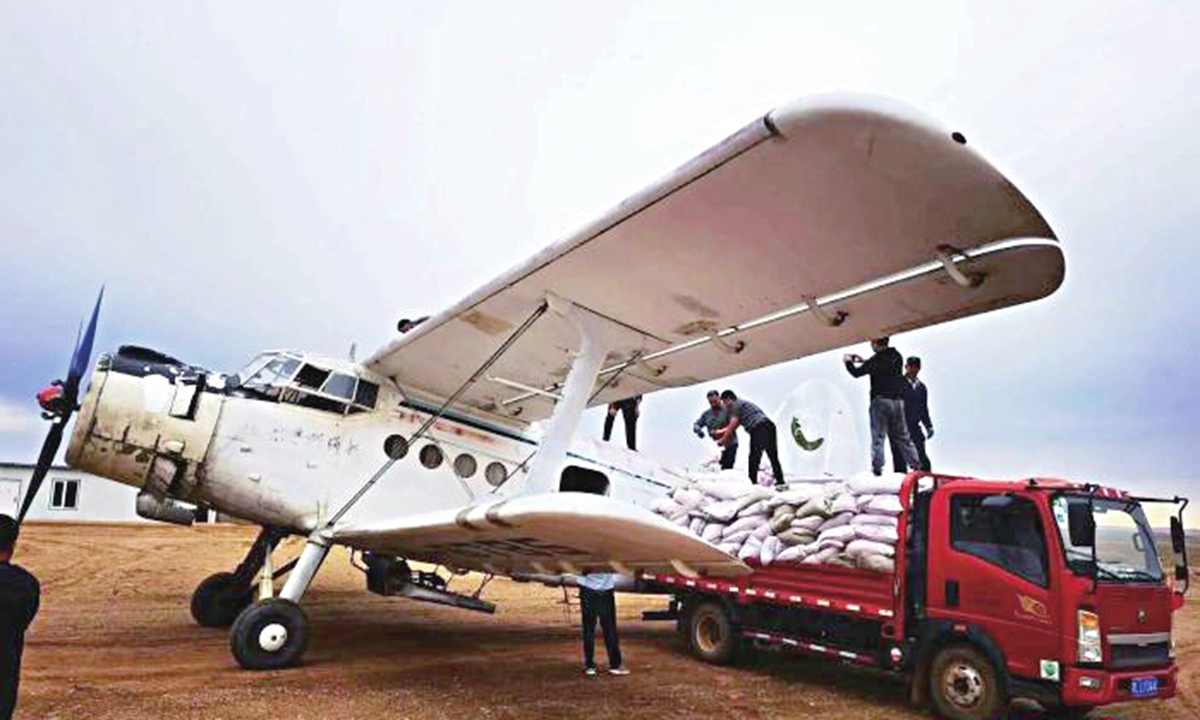
Since 2004, he has led efforts to tackle desert restoration challenges by introducing large-scale aerial seeding projects, creating a breakthrough approach for restoring degraded desert ecosystems in the region.
"Compared with traditional methods, aerial seeding is more efficient and can cover wider areas. Based on local climate and soil conditions, we select suitable desert plant seeds and precisely control the seeding height, density and timing to improve survival rates as much as possible and accelerate desert recovery," Wensuyalatu explained.
After years of effort, the aerial seeding projects under Wensuyalatu's leadership have restored more than 800,000 mu of desert land, with an effective restoration rate of 62.2 percent.
He also developed an integrated management approach combining "protection, management, retreat, restoration and publicity," establishing a mixed vegetation system of trees, shrubs and grass to curb desert expansion and reduce sandstorms at their source.
Beyond restoring greenery, Wensuyalatu has also focused on strengthening scientific research and protecting native desert species.
Starting in 2010, he devoted himself to the artificial cultivation of endangered native desert plants. After more than a decade of repeated experiments, he successfully developed cultivation techniques for rare species such as the endangered evergreen broadleaf shrub Ammopiptanthus mongolicus, Mongolian almond and drought-resistant elm.
Under his leadership, his team cultivated 6.5 million seedlings and completed more than 4,000 mu of high-quality afforestation projects, with seedling survival rates consistently exceeding 80 percent.
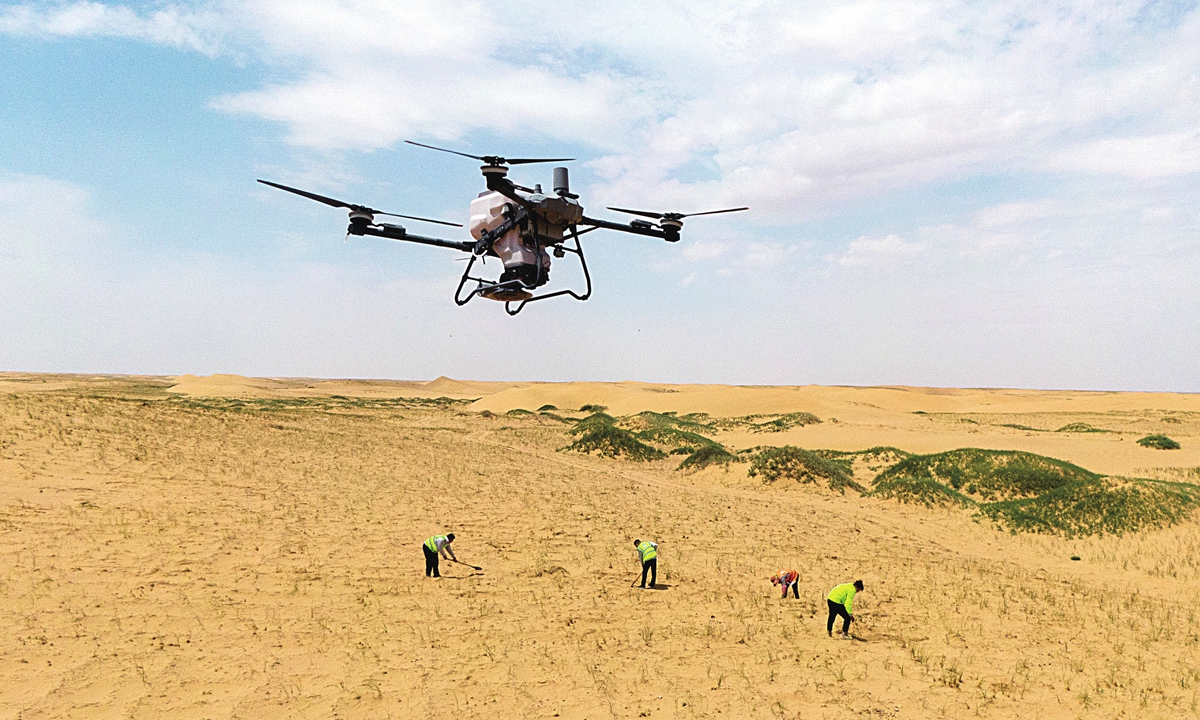
For Wensuyalatu, desert restoration is not only about creating ecological benefits, but also about improving people's livelihoods.
He has long promoted the idea that "trees should bring both ecological value and economic value." By leveraging local desert resources, he helped establish a 10,000-mu industrial base for desert plants and cistanche - a medicinal plant often grown in desert environments - across four key local villages, integrating ecological restoration with specialty desert industries.
"In the past, people thought desertification control was simply about planting trees - it took a lot of efforts but brought little income. Now things are different. By planting trees and developing industries such as cistanche cultivation, desert land can generate real wealth," a local herder said.
To ensure that local communities benefit from ecological development, Wensuyalatu introduced enterprises, supported family forest farms and professional cooperatives, and promoted large-scale, market-oriented operations.
The once barren desert has gradually become a "green treasure chest" for local herders, achieving a win-win outcome: greener landscapes, improved ecosystems, stronger businesses and higher incomes.
"Desertification control is not just an ecological project, but also a project that benefits people," Wensuyalatu said.
"Only when communities gain real benefits from protecting nature will they actively participate in ecological conservation. That is the key to making restoration efforts sustainable and achieving the vision that lucid waters and lush mountains are invaluable assets," Wensuyalatu said.
Global Times
。 东北虎、棕熊随着冬季到来,开始悄悄地进行着季节性的“变装”——换毛,从又短又稀疏的夏季“背心装”,换上了一身又长又蓬松的冬季“大衣装”,看着更加圆润了。 有了“新衣服”的加持,加上冬季食欲大增,它们表现得更加活跃,与同伴嬉戏打闹,半路拦截“零食车”,有时还会下水“摸个鱼”,平时对投喂车上的食物爱答不理,如今却经常主动上前享用! #part.03 Tip3·行为展示 每天,车入区还会有超级丰富的行为展示 可以带你近距离领略纪录片里的震撼场景 详情时间可在官网、小程序查询 猎豹速度、上车展示 现实版猎豹“速度与激情” 猎豹一跃上车,与你擦肩而过 非洲狮上树 草原之王非洲狮也玩“猫爬架” 爬上树寻找美味的零食 东北虎、白虎上车 东北虎、白虎霸气登上车顶 悠然自得巡视领地 棕熊爬杆、戏水 棕熊借助利爪,轻松爬上树干取食 下水摸鱼,捕捉“发射塔”送来的苹果 不同车型可供选择 大种群散放养展示,还原动物世界 丰富精彩的行为展示 趁着冬日毛孩子们的活跃时刻 快来打卡车入区吧。
Current article:http://8a35h.guaxiazaopinduan.cfd/news/20260826_54139.html
Published on:12:59:04
天黑请闭眼_Random reading
- 08-25पैसा कमाने में अदाणी ग्रुप का रिकॉर्ड प्रदर्शन, 3 महीने व सालभर की आय ने चौंकाया, इन कंपनियों ने कराई खूब कमाई
- 08-25微视频丨一飞冲天!“雄安一号”成功入轨
- 08-20院区受困、床位压缩、扩张大减速:10年“分院时代”的野望迎来终局
- 08-26Qinghai-Xizang Plateau forum focuses on high-quality development, ecological protection
- 08-26莆田夹漈草堂:深山藏文脉 布衣著春秋
- 08-22守灵结束!梅西参加父亲葬礼做最后告别 一个人双手插兜低头缓行
- 08-20Taiwan's 'status downgrade' complaint over Nagasaki memorial ceremony seating exposes DPP's illusion of seeking international recognition: mainland experts
- 08-22电池相关化工赛道爆发式行情,可持续吗?
- 08-24机票退改新标准计划年内出台,要求平台在旅客支付前主动公示退改费率
- 08-22전남광주통합시 일부 광역사무, 시군구 이양 '시동'

男儿本色_Active users
- 统筹保供和转型双向发力,煤炭工业“十五五”发展路线图明晰
- 美媒:076最让人担忧的不是电磁弹射,而是其恐怖的生产速度!
- 两融利率是什么?2026计息规则、定价标准与省钱技巧
- 市政府召开党组(扩大)会议和常务会议
- 利弗莫尔中概股龙头指数盘初上涨0.5%
- 【仓单】8月26日郑商所锰硅期货仓单较上一日下降577张
- 江苏无锡市中级人民法院原党组成员、审判委员会委员刘勇被查
- [绥中]县委常委会(扩大)会议召开
- Box Office Report: Tere Ishk Mein Heads Toward The Rs 100 Crore Mark
- New advances in lunar soil research offer scientific evidence to unravel mystery of moon’s 'two faces'
- 65歳を過ぎたら「1日4食」がちょうどいい…医師が「血管を守り、健康寿命が伸びる」と断言する1週間の献立表
- Haryana News: भर्ती के लिए OSC-DMC प्रमाणपत्र अपलोड से चूके युवाओं को मिला मौका, नायब सरकार का बड़ा तोहफा
- 上半年国内手机出货量超98%支持北斗定位
- WAIC 2026终极盘点!15大核心趋势,看透AI下半场
- 今天开始!杭州大型活动交通管理通告
- 跑步被绊倒扭伤:怪“路”,还是怪“人”?
- 秋果香 采摘乐 尽享好时光
- 车臣领导人卡德罗夫徒手推车,力破病重传闻,曾被传“胰腺坏死”
红楼梦_Hottest this week
- 08-25涉骑脚踏车撞死六旬路人 妇女被控疏忽致死罪
- 08-24别只盯着黄岩岛了,中国刚在南海腹地落下一步棋,或改变南海格局,始皇聊历史,原创 别只盯着黄岩岛了,中国刚在南海腹地落下一步棋,或改变南海格局,中沙大环礁的战略价值,远非普通科研站点,中国的“规则之网”,结语
- 08-26含豹5/豹8/钛3车型 方程豹6月购车活动发布
- 08-222025粤港澳大湾区车展:日产N7亮相 售价11.99万起
- 08-24运输致16盒药品破损,仅赔付20元,赔付极不合理
- 08-26都体:巴萨体育总监德科对佛罗伦萨前锋小基恩感兴趣
- 08-25尺素金声丨对编造、传播股市谣言坚决说不
- 08-22官方通报老人摆摊被收10元地摊费:已退回收取费用
- 电影天堂 copyright
- Some of the content comes from the Internet. If you have any offence, please raise it.